
You just removed your Jagua temporary tattoo and the design looks incredibly light—or almost invisible. Did the Jagua work?
In most cases, there is no reason to panic. One of the most fascinating things about Jagua body art is that the final color does not appear immediately. A fresh Jagua stain can initially look very faint and then gradually develop into beautiful blue, navy or blue-black tones during the following hours.
At Artzy Henna, I create hand-drawn Jagua temporary tattoos, henna-inspired designs and custom temporary body art. Understanding Jagua color development and following proper Jagua tattoo aftercare can help you know exactly what to expect after your appointment.
In this complete Jagua aftercare guide, I will explain how Jagua develops, what your tattoo may look like during the first 48 hours, what to avoid, how to care for your design and why patience is one of the most important parts of the Jagua experience.
What Is Jagua Body Art?
Jagua is used to create temporary body art that gradually develops into distinctive blue, navy or blue-black tones. It is especially popular with people who enjoy detailed temporary tattoos, fine-line designs, florals, decorative patterns and contemporary body art without the permanence of a traditional tattoo.
Jagua and henna are both forms of temporary body art, but they are not the same material and they do not develop in exactly the same way.
If you are deciding between the two, read my detailed comparison: Natural Henna vs. Jagua: Which Temporary Body Art Is Right for You?
How Does Jagua Color Develop?
Jagua color development is gradual. This is the most important thing to understand when getting a Jagua temporary tattoo for the first time.
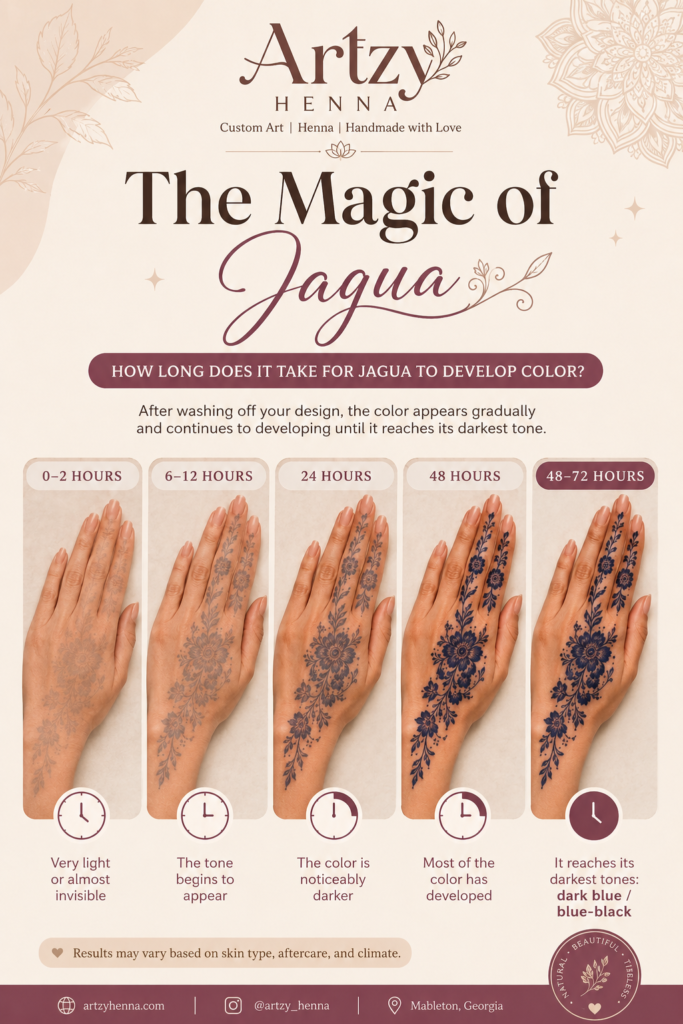
After the Jagua product has been removed according to the instructions provided for your application, the design may initially appear extremely light. The stain then develops progressively rather than revealing its final blue-black color immediately.
Many Jagua designs become noticeably darker during the following 24 to 48 hours. Exact development varies from person to person, so your result may not follow an identical timeline to someone else’s.
Jagua Color Development Timeline
Although every Jagua stain develops differently, understanding the general process can prevent unnecessary worry.
0–2 Hours: The Jagua Stain May Look Very Light
Immediately after removal, your Jagua tattoo may look surprisingly faint. Some areas may appear extremely light or difficult to see.
This does not automatically mean that your Jagua tattoo failed.
The stain is still developing beneath the visible surface appearance. Give the color time instead of judging the final result immediately.
6–12 Hours: The Jagua Design Begins to Appear
As time passes, you may begin noticing the design becoming easier to see. Lines that looked extremely faint immediately after removal can gradually become more visible.
The transformation is one of the reasons Jagua body art is so interesting. The artwork continues changing after the application itself is finished.
Around 24 Hours: Noticeably Darker Jagua Color
During the first day, your Jagua temporary tattoo may become significantly more visible.
Blue and navy tones can begin appearing more clearly as the stain develops.
Remember that development varies. Do not worry if your design is developing slightly faster or slower than another person’s Jagua tattoo.
Around 48 Hours: A Deeper Jagua Stain
By approximately 24 to 48 hours, much of the Jagua color development commonly becomes visible. The design may now show richer blue, navy or blue-black tones.
This is why waiting is so important. The Jagua you see immediately after removal is not necessarily representative of the finished stain.
After 48 Hours: Enjoy Your Developed Jagua Body Art
Once the stain has developed, you can enjoy the finished temporary body art while continuing to treat the area gently.
Exact darkness, development time and longevity can vary according to placement, product contact, individual skin characteristics, daily activity and aftercare.
Why Is My Jagua Tattoo So Light After Removal?
This is one of the most common questions about Jagua temporary tattoos.
A light initial stain is a normal part of Jagua development. Unlike a permanent tattoo, where pigment is immediately visible in the skin, Jagua creates a temporary stain that develops gradually.
Therefore, avoid judging your finished Jagua tattoo immediately after the product has been removed.
Give the Jagua stain time to develop.
What Color Does Jagua Become?
A developed Jagua tattoo typically produces blue, navy or blue-black tones. This distinctive appearance is one of the reasons Jagua has become popular for contemporary temporary body art.
Jagua can work beautifully for:
- Fine-line temporary tattoos
- Floral Jagua designs
- Botanical body art
- Henna-inspired Jagua patterns
- Mandala designs
- Geometric temporary tattoos
- Small symbols
- Decorative hand designs
- Custom temporary tattoos
- Modern temporary body art
Visit my Henna Designs & Latest Creations page to explore body-art inspiration and recent designs.
Jagua Tattoo Aftercare: How to Get the Best Results
Good Jagua tattoo aftercare starts immediately after application. Jagua requires its own drying, removal and development process, so it should not simply be treated exactly like traditional henna.
1. Allow Fresh Jagua to Dry Completely
After your Jagua design is applied, allow it to dry completely. Avoid touching, rubbing or smearing the fresh artwork.
This is especially important because fresh Jagua can transfer before it has fully dried.
2. Avoid Accidental Jagua Transfer
Be careful about pressing the freshly decorated area against another part of your body.
Transferred Jagua may create an unintended temporary stain. Try to keep the design separated from other skin surfaces while it is fresh.
3. Follow Your Artist’s Removal Instructions
There is no reason to guess how long your specific Jagua product should remain on your skin.
Follow the removal timing and instructions provided by your Jagua artist or the directions supplied with the specific Jagua product you are using.
Jagua should not automatically be treated using traditional henna removal instructions because the two materials are different.
4. Don’t Panic After Removal
Your freshly revealed Jagua design may look very light.
This is normal.
Allow approximately 24 to 48 hours for the Jagua stain to progressively develop before judging its final appearance.
5. Avoid Aggressive Scrubbing and Exfoliation
Once your Jagua temporary tattoo has developed, normal bathing is fine. However, aggressive scrubbing, exfoliation and repeated friction can cause temporary body art to fade more quickly.
6. Protect the Design From Excessive Friction
Repeated rubbing from clothing, washing or other daily activities can accelerate fading.
You cannot stop natural skin renewal, but treating the decorated area gently can help preserve your visible Jagua body art for longer.
What Should You Avoid After Getting a Jagua Tattoo?
If you want to protect your Jagua design, avoid unnecessary activities that repeatedly exfoliate or rub the decorated area.
- Aggressive scrubbing
- Body scrubs over the design
- Excessive exfoliation
- Repeated friction
- Unnecessary scratching
- Frequent chlorinated swimming
- Prolonged soaking
Temporary body art naturally fades as the outer skin renews, but excessive friction and exfoliation can speed up that process.
How Long Does a Jagua Temporary Tattoo Last?
A Jagua temporary tattoo commonly remains visible for approximately one to two weeks, although some designs may fade sooner or remain visible longer.
How long Jagua lasts can depend on:
- Body placement
- How frequently the area is washed
- Friction
- Exfoliation
- Swimming
- Daily activity
- Individual skin turnover
- Aftercare
Because Jagua stains the outer layers of skin, the design gradually disappears as those skin cells naturally renew.
Does Jagua Get Darker Overnight?
Yes, a Jagua stain can look noticeably darker after several hours of development. Someone who removes Jagua and sees a faint design may wake up the following day to find that the artwork has become much more visible.
The color can continue developing through approximately the first 24 to 48 hours.
This gradual transformation is part of the magic of Jagua body art.
Jagua vs. Henna Color Development
Henna and Jagua are often discussed together because both create temporary body art, but their color-development processes are different.
| Feature | Jagua | Henna |
|---|---|---|
| Initial Appearance | Can appear extremely light after removal | Often begins orange or light orange-brown |
| Developed Color | Blue, navy or blue-black | Orange-brown, reddish-brown or rich brown |
| Development | Gradually darkens | Gradually oxidizes and deepens |
| Typical Development Window | Approximately 24–48 hours | Approximately 24–48 hours |
| Permanent? | No | No |
For a complete comparison, read Henna vs. Jagua: Which Temporary Body Art Is Best?.
Henna Aftercare Is Different From Jagua Aftercare
One common mistake is assuming that henna aftercare and Jagua aftercare are interchangeable.
They are not.
Fresh henna paste commonly remains on the skin for several hours. After removal, the initial orange stain gradually oxidizes and becomes deeper during the following 24 to 48 hours.
Jagua requires its own drying and removal process and can initially appear extremely faint before developing toward blue or blue-black tones.
For complete instructions for both materials, bookmark my Henna & Jagua Aftercare Guide.
Professional Jagua Body Art at Artzy Henna
At Artzy Henna, I create custom Jagua tattoos, henna designs and temporary body art by hand. Designs can range from small and simple patterns to detailed custom artwork created specifically for the placement and person wearing it.
My temporary body-art work focuses on line quality, spacing, movement, placement and composition rather than simply copying a pattern.
Visit Henna & Jagua Services to explore regular custom appointments and available temporary body-art options.
Want to Create Jagua Body Art Yourself?
Jagua is not only part of my client work—it is also part of the creative practice and artist supplies available through Artzy Henna.
If you are learning decorative body art, explore my Beginner’s Guide to Henna & Jagua Cone Control, Lines and Designs. It covers cone pressure, dots, lines, curves, spacing, pattern building and design composition.
You can also explore Henna & Jagua Supplies, including my Fresh Jagua Gel Cone for temporary body-art application and creative practice.
Frequently Asked Questions About Jagua Tattoos
How long does it take for Jagua to develop color?
Jagua color develops gradually. The design can initially look very light after removal and commonly becomes significantly darker during the following 24 to 48 hours.
Why is my Jagua tattoo almost invisible after removal?
A very light initial Jagua stain can be normal. Do not immediately assume the application failed. Allow the stain time to develop before judging its final appearance.
What color does Jagua become?
Jagua temporary body art typically develops into blue, navy or blue-black tones. Exact intensity can vary depending on placement, product contact, individual skin characteristics and aftercare.
Does Jagua get darker overnight?
It can. Jagua develops progressively, so a design that looks faint shortly after removal can appear noticeably darker several hours later or the following day.
How long should I leave Jagua on?
Follow the removal timing and instructions provided by your artist or the directions for the specific Jagua product being used. Jagua products can differ, so do not automatically follow henna paste timing.
How long does a Jagua temporary tattoo last?
Jagua body art commonly remains visible for approximately one to two weeks. Placement, washing, exfoliation, friction, swimming, daily activity and individual skin turnover can affect how quickly it fades.
Can I shower after getting Jagua?
Once you have completed the initial drying, removal and development instructions provided for your Jagua application, normal bathing can resume. Aggressive scrubbing, prolonged soaking and frequent exfoliation can make temporary body art fade faster.
Is Jagua the same as henna?
No. Jagua and henna are different temporary body-art materials. Henna generally develops into warm orange-brown to reddish-brown tones, while Jagua typically develops into blue, navy or blue-black tones.
Can Jagua accidentally transfer to another area?
Fresh Jagua can transfer before it has dried. Avoid touching, smearing or pressing freshly applied Jagua against another part of your skin because this may create an unintended stain.
Where can I book a Jagua temporary tattoo?
Visit Artzy Henna’s Henna & Jagua Services to learn about temporary body-art appointments, or contact me with questions about a custom design.
The Secret to Beautiful Jagua? Give It Time.
The most important thing to remember about Jagua color development is simple: the color you see immediately after removal is not necessarily the finished color.
Your Jagua tattoo may begin extremely light, gradually become visible and develop into deeper blue, navy or blue-black tones over the following 24 to 48 hours.
Allow the design to dry properly, follow the correct removal instructions, avoid accidental transfer, give the stain time to develop and protect your finished temporary tattoo from unnecessary exfoliation and friction.
That transformation—from a barely visible design to beautiful developed Jagua body art—is part of what makes Jagua so fascinating.
Ready to experience it yourself? Explore my Henna & Jagua Body Art Services, browse latest body-art designs, read my complete Henna & Jagua Aftercare Guide, or contact Artzy Henna to discuss your next temporary body-art design.
Leave a Reply